
Data Analytics Insights: What Your Systems Are Already Telling You
Published Date:
26 Jun, 2024
Updated Date:
05 Oct, 2026
Data Analytics Insights: What Your Systems Are Already Telling You
Your business already produces data analytics insights every day. Here is what most teams miss, and what a properly monitored setup looks like instead.
You already have data analytics insights sitting inside your business right now. Most expert-led teams never get to the part where someone actually reads them.
TL;DR
Most expert-led businesses already generate more data analytics insights than anyone is using. The shortfall usually isn’t the data itself. It’s that reading it, testing it, and acting on it before a launch, a lead, or a sale slips away isn’t clearly anyone’s job. This piece walks through what a properly monitored analytics setup actually includes, four familiar scenarios where the numbers go unread, and one step worth taking this week.
Every platform running underneath a course, a membership, or a certification program produces data. The CRM logs opens and clicks. Checkout logs completions and abandons. The ad platforms log spend, impressions, and cost per click. An analytics tool, private or otherwise, logs the path each visitor took to get there.
None of that is the problem. Every one of those systems is already producing data analytics insights. The problem shows up after the data is collected: usually nothing happens with it, or something incomplete happens, or something happens that only one person on the team half-remembers how to check.
That shortfall looks different depending on where a business sits. A flat launch reads one way to someone chasing the next revenue plateau, and an entirely different way to someone who dreads the moment the cart opens. The four scenarios below are the versions of this pattern we see most often across course creators, membership businesses, training brands, and certification businesses, followed by what a properly watched analytics setup looks like instead of a guess.
None of these scenarios require a bigger team or a bigger budget to fix. They require someone deciding that watching the system is a job, not a task that gets picked up between everything else.
What data analytics insights are actually telling you right now
A working analytics setup does more than count visitors. It should be able to answer a handful of specific questions without anyone needing to dig:
- Which entry points and campaigns are actually producing paying customers, not just clicks
- Whether a lead converting today looks the same as one converting six months ago
- Where in the funnel people are dropping off, and whether that’s a page problem or a targeting problem
- What a page change did to conversion, not just to traffic
Most setups can answer the first question, sort of. Fewer can answer the second and third with any confidence, because doing so means tracking a lead all the way from first click to completed purchase, not just watching a traffic number climb. This is the layer TDN’s Growth service is built to operationalize: turning that full path into something a team can actually see and act on, rather than something scattered across four different logins.
That distinction matters more than it sounds like it should. A page can get more visitors this month than last month and still be converting worse, and a dashboard built around traffic alone will never show the difference. Correlation between rising leads and rising revenue is a start. It is not proof, and treating it as proof is how marketing budgets end up funding the loudest channel instead of the one actually closing sales.
Here’s a version of that mistake we see often: lead volume climbs for two straight months alongside a jump in revenue, and the obvious conclusion is that the new lead source caused the growth. Closer inspection sometimes shows a seasonal launch running at the same time, doing most of the actual work, while the new lead source only looks responsible because the timing lined up. Without entry-page and cost-per-acquisition data tied to the same time window, that kind of coincidence is nearly impossible to catch.
Part of why this happens is the tool itself. Default analytics setups sample data rather than counting every visitor, which is one of the less obvious reasons two people looking at the same traffic number can get different answers. A private analytics setup, or any Google Analytics alternative built to count rather than sample, closes that gap, but the tool is only half of it. Someone still has to be the one checking it on a schedule.
The pattern we see most often isn’t a missing tool. It’s a tool nobody assigned to a person, a schedule, or a report. In practice, that assignment is smaller than it sounds: someone checking the same handful of numbers on the same day each week or month, comparing them to the range they’d expect, and flagging anything that’s moved outside it before it becomes a bigger problem. Most businesses at this stage already have someone who could own that check. What’s usually missing is the decision that it’s their job, done on a schedule, rather than something that happens whenever there’s spare time.
That shows up differently depending on what a business is actually trying to solve for, which is where the next four scenarios come in.
When the numbers don’t match the effort

A membership or course business running ad campaigns across two or three platforms, spending a meaningful monthly budget, and generating a steady flow of leads has a good problem and a hidden one at the same time. Revenue is fine. What isn’t fine is that nobody on the team can say, with any confidence, which campaign actually produced a paying member and which one just produced a click.
That’s usually because the tracking stops at the surface: pageviews, form fills, maybe a broad conversion count, with no connection between a specific entry point and the person who eventually paid. Without that link, every budget conversation becomes a guess dressed up as a decision.
The fix is to tie completed purchases back to the page and campaign that produced them: export lead data, match it against paid customers, and build conversion tracking around the purchase event itself, not the form fill. Once that connection exists, entry-page reporting shows exactly where paying customers started their journey, often revealing that 30 to 50% of them came through a single landing page nobody had prioritized. From there, the ad budget can move toward what’s proven instead of what’s loudest.
The same setup makes cost per acquisition an actual number instead of an estimate. Once a business can see what it spent to generate one paying customer through a specific channel, scaling stops being a leap of faith. A campaign with a lower cost to acquire a customer and room to grow is worth more budget. A campaign that only looks good in a raw click count is worth a second look before another dollar goes toward it.
Ask the team this: if you pulled last month’s ad spend by platform right now, could you say which one produced actual members, or only which one produced the most clicks?
The same blind spot that hides which campaign is working also hides something else: whether the first thing a new visitor sees still matches what the business has actually become.
When the brand outgrows what the homepage shows

A book deal, a media appearance, or a growing public profile brings a wave of new visitors who have never seen the site before. They land on the homepage, and the homepage still routes attention based on decisions made two or three years ago. The most prominent links go to whatever mattered back then, not to what the business is actually known for now.
A homepage built once and never revisited becomes an accidental representation of the business rather than a deliberate one. Entry-page data usually confirms the gap directly: a meaningful share of new visitors from a media mention or podcast appearance never make it past the homepage at all, because nothing there matched what brought them.
The fix is to review what’s actually linked from the homepage against what the business wants a first-time visitor to see this quarter, then use entry-page and click data to confirm people are following the paths intended for them. A book launch, a documentary release, or a major speaking engagement is a natural trigger for that review. So is a slower-moving version of the same thing: three consecutive months of a public profile visibly growing while the homepage hasn’t changed.
A homepage that gets revisited on a schedule stops being a museum of old priorities and starts being a decision, remade as the brand grows. The same discipline applies to the smaller, easier-to-forget maintenance behind the scenes, which is where the next pattern shows up.
When only one person can read the reports

Somewhere in the business, a VA or an OBM set up the tracking that exists today. They know which dashboard means what, which number is reliable, and which one has a known gap. If that person takes two weeks off, or leaves, the reports don’t stop generating. They stop being readable.
Tracking that lives entirely in one person’s head isn’t infrastructure. It’s a habit, and habits don’t transfer. The same risk shows up in smaller recurring tasks too, like keeping internal links current across a growing article library so that new content actually gets found instead of sitting orphaned.
The fix is a standard, documented reporting format that names what each number means, where it comes from, and what a normal range looks like, so a second person can pick it up without a handoff meeting. A short runbook covering login access, which goals exist and why, and what to do when a number looks off turns a report into something the whole team can trust, not just the person who built it.
We’ve seen this play out the hard way: a VA who single-handedly built and maintained a business’s entire tracking setup gives two weeks’ notice, and the numbers keep flowing in but nobody left behind can say which ones to trust. That situation is preventable, and the prevention has nothing to do with hiring a bigger team. It has to do with writing things down before they’re needed.
Reporting built to be handed off outlives whoever built it. The same idea applies to the biggest and most stressful moment on the calendar for a lot of these businesses: the launch window.
When the surprise shows up during the launch, not before
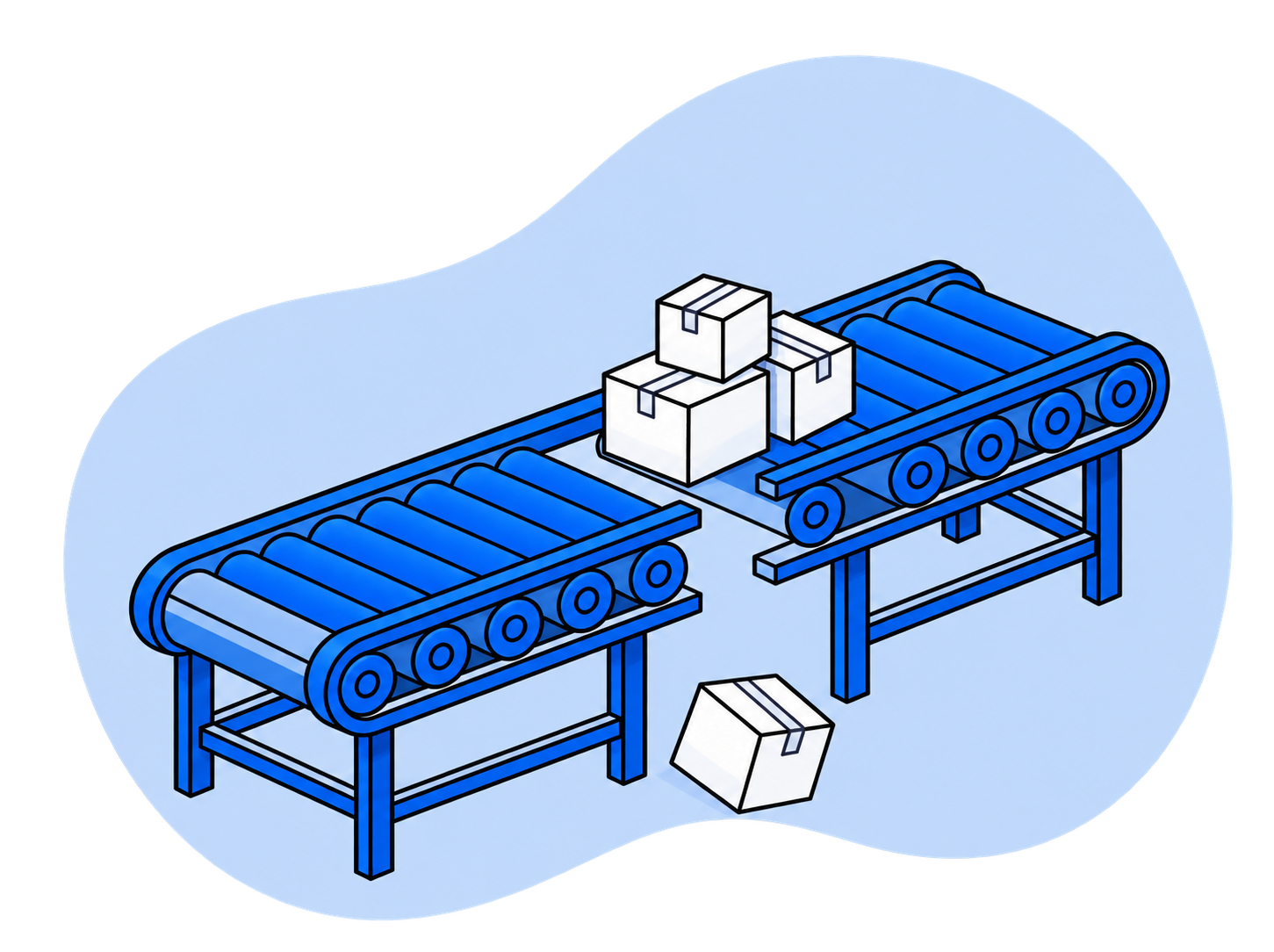
A funnel that worked fine on the last launch gets reused for this one, untouched since the last cart closed. Somewhere in the sequence, a form stops firing, a tracking pixel drops, or an automation misfires, and nobody finds out until a customer support ticket arrives or the numbers look strange three days into the launch window.
Funnels degrade between launches, often undetected. A plugin update, an API change on the CRM side, or a small edit made under deadline pressure can break one step without breaking the whole funnel, which is exactly why it goes unnoticed until it matters most.
The fix is testing every step of the funnel before the cart opens, not after: form to automation to email to CRM to access or checkout, confirmed working end to end, with the tracking checked at the same time so the launch data can actually be trusted once traffic starts. Traffic segmentation matters even more during a launch than it does the rest of the year, since a launch usually pushes several channels at once, and knowing which one is actually driving carts opened is the difference between a clean read on results and a guess made under pressure.
Whichever of these four sounds most familiar, the underlying fix is the same one: something needs to be checked before it becomes a problem, not after.
What a properly monitored analytics setup actually includes
Pulling the four scenarios together, the data analytics insights that actually change a business share a few things in common, regardless of which scenario applies most right now:
- Goals tied to revenue events (a completed purchase, an enrollment, a membership start), not vanity metrics like raw traffic
- Traffic segmented by source and campaign, so performance is visible channel by channel, not just in aggregate
- Entry-page and funnel-step tracking on the specific paths that lead to a sale
- A monitoring cadence, meaning someone checks it on a schedule, not only when something already looks wrong
- A report that reaches the business owner and the team without requiring anyone to log in and search for it
- Documentation, so the setup survives a staff change instead of leaving with whoever built it
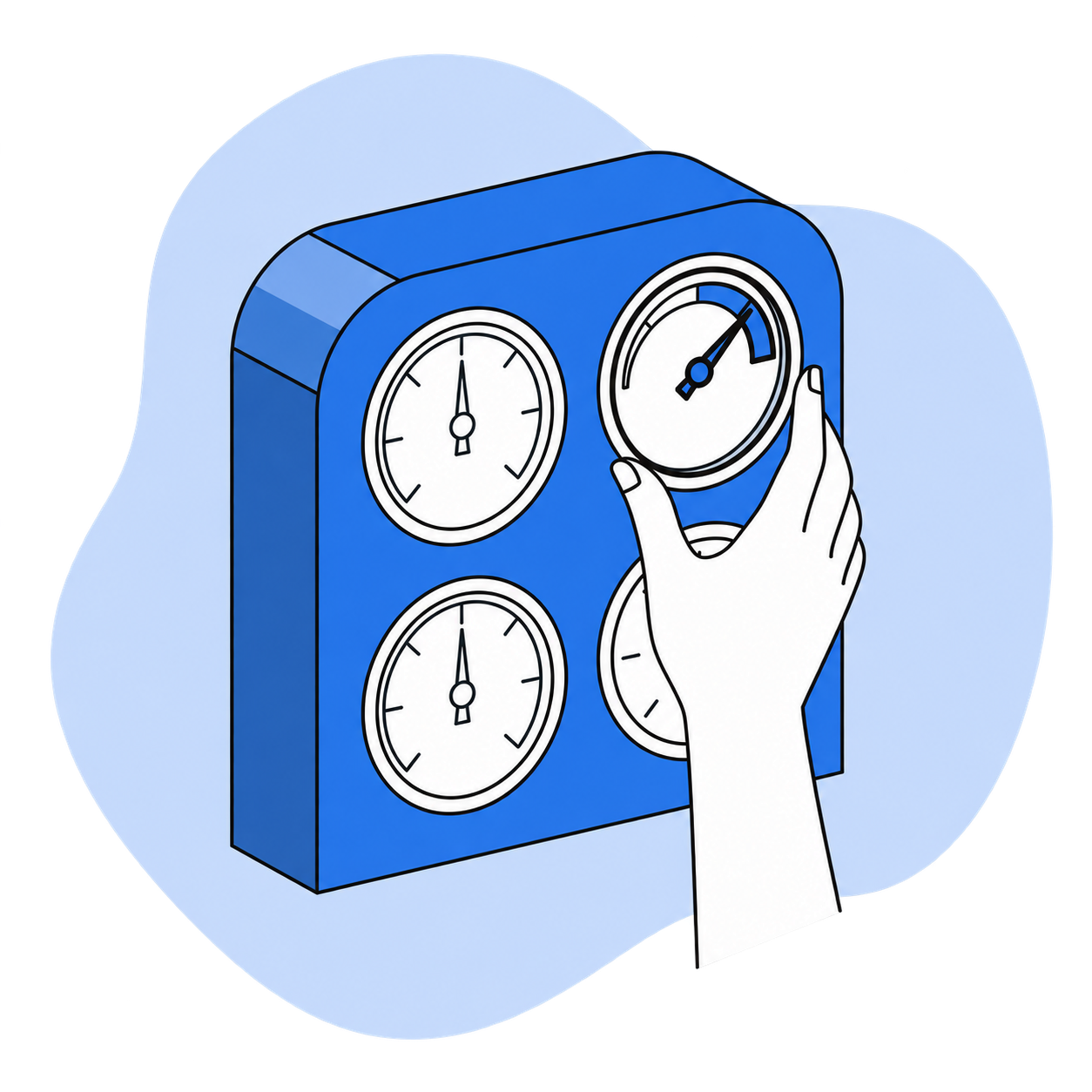
The version of this that doesn’t work is installing a tool and calling the job done. A dashboard nobody opens produces the same blind spot as having no dashboard at all, just with a better-looking login screen. The difference between a reactive setup and an actively managed one isn’t the software. It’s whether a person is assigned to look.
Notice that all four scenarios earlier in this piece trace back to one of these same six items. The campaign that couldn’t prove itself was missing a way to trace a sale back to the channel that actually produced it. The homepage that outgrew the brand was missing a review cadence. The reports only one person could read were missing documentation. The launch surprise was missing pre-launch testing. Different businesses, same six gaps, in different combinations.
None of these six items requires new software in most cases. The tools already installed can usually do this. What they need is someone assigned to the job: a person, a day of the month it happens, and a place the resulting report actually lands. That’s a role, not a feature, which is exactly why it tends to fall through the cracks in a business built one tool at a time.
A managed setup like this is most of what sits underneath TDN’s Managed Plans: someone accountable for watching the connected system, not just building it once and moving on.
Where to go deeper, depending on what fits
Each of the four situations above has its own article that picks up where this one leaves off:
If the ad numbers don’t add up: Search engine performance, and why Search Console alone isn’t the full picture
If the site hasn’t caught up with a growing profile: What actually belongs on your homepage
If only one person could explain the reports: Keeping internal links and systems documented as a business grows
If the last launch had a rough surprise: Building and publishing pages the same way, every time
The smallest next step, and the bigger one
None of the four scenarios above get fixed by buying another tool. The data analytics insights needed to fix them already exist somewhere in the stack. They get fixed by someone deciding, this week, to actually look. That can start small or start bigger, depending on how much of this sounded familiar.
If only one of the four situations sounded like this business, the article for that one above is the faster, more specific read. If more than one sounded familiar, that’s usually a sign the gap isn’t isolated to a single page or campaign. It’s in the system underneath all of them, which is a different kind of conversation.
This week: if landing pages are the immediate concern, the landing page checklist is a same-day audit. Pull it up against the pages currently running ads and check for the gaps most setups miss, no call required.
When more than one of these sounded familiar: a discovery call is where TDN looks at what’s currently being tracked, what isn’t, and what a properly monitored analytics setup would look like for this specific stack, not a generic one.
Whichever version of this sounds familiar, the fix rarely starts with new software. It starts with deciding who’s actually responsible for reading what the systems are already saying.
Questions that come up about monitoring your analytics
Do we need to switch analytics tools to fix this?
Rarely. Most of what is described above runs on the tools already installed. The gap is almost never the software. It is that nobody owns checking it on a schedule. A tool swap is worth considering only after that ownership question is answered, not before.
How long does it take to get a monitored setup in place?
It depends on how many campaigns, funnels, and platforms are already in play, and how much of the current tracking is undocumented. The honest answer comes out of a discovery call rather than a range in an article. What is predictable is that documenting what exists today is usually the longer part, not the technical fix itself.
What if we only have time to fix one of the four scenarios right now?
That is common, and it is workable. Pick the one costing the business the most right now, fix that one properly, and use the same monitoring habit on the others once it is running. The scenarios share the same six underlying gaps, so the discipline built for one usually transfers to the rest faster than expected.
Who ends up owning this once it is set up?
Someone has to, and naming that person is part of the fix. For some businesses that is an existing operations hire. For others, it becomes part of what TDN’s Managed Plans cover: a standing check, on a schedule, that does not depend on anyone remembering to do it.
If any of these questions is the one actually holding the decision, it is a better conversation than an article. That is what the discovery call is for.











0 Comments